
B2B Lead Generation for Small Businesses: A Simple Guide
Learn how small businesses can generate consistent B2B leads with proven strategies including prospecting, cold outreach, and booking qualified sales meetings.
Toni Abrahams
3/5/20262 min read
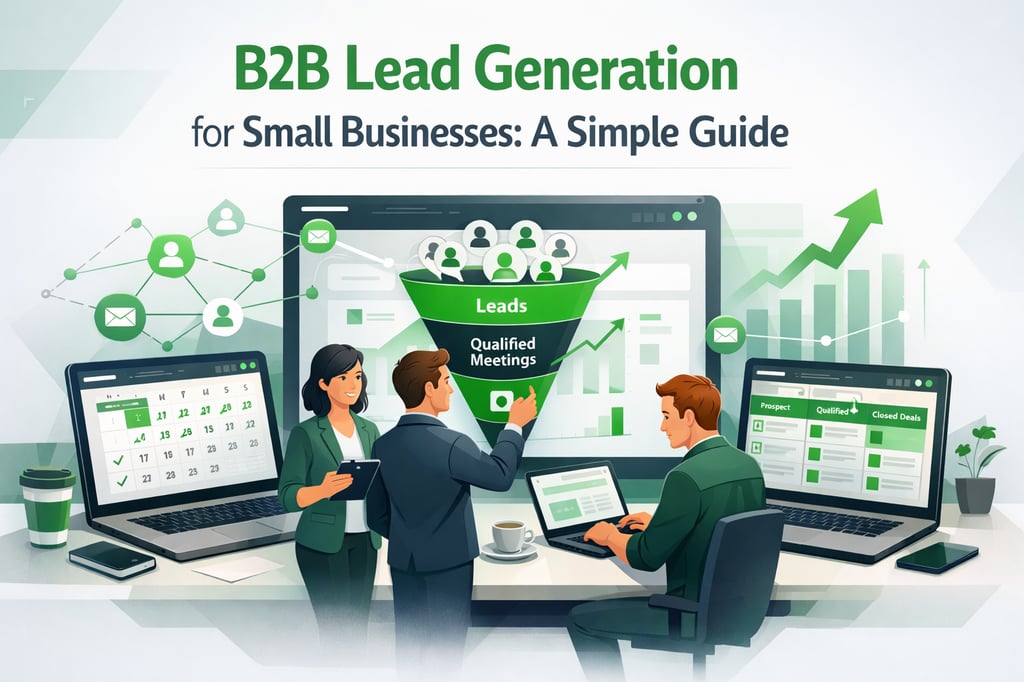
For many small businesses, the hardest part of growing revenue isn’t delivering a great service. It’s consistently finding new customers.
Without a steady stream of prospects, sales become unpredictable. Many founders spend hours every week searching for leads, sending cold emails, and trying to book meetings.
The good news is that B2B lead generation can be simple and repeatable when the right systems are in place.
This guide explains the most effective ways small businesses can generate qualified sales meetings and consistent pipeline growth.
What Is B2B Lead Generation?
B2B lead generation is the process of identifying businesses that may benefit from your product or service and starting a sales conversation with them.
A lead is usually a decision-maker at a company that fits your ideal customer profile.
Examples include:
• A CEO looking for marketing services
• A Head of Sales evaluating sales tools
• An IT director searching for technology partners
The goal is to turn these prospects into qualified meetings and customers.
Why Lead Generation Is Challenging for Small Businesses
Small companies often struggle with lead generation for three main reasons.
Limited resources
Most small businesses do not have a full marketing team running campaigns.
Inconsistent prospecting
Lead generation only happens when sales slow down.
Poor targeting
Businesses often reach out to too many industries instead of focusing on a specific audience.
When targeting and messaging improve, response rates increase significantly.
Step 1: Define Your Ideal Customer
Before generating leads, you must define your ideal customer profile (ICP).
Key factors include:
Industry
Company size
Decision-maker title
Geographic region
For example, a clear ICP might look like:
• SaaS companies
• 10–200 employees
• VP of Sales or CEO
• North America
Clear targeting makes outreach much more effective.
Step 2: Build a Prospect List
The next step is creating a list of companies that match your ICP.
Prospecting tools commonly include:
• LinkedIn
• company databases
• industry directories
Your prospect list should contain:
• company name
• decision-maker name
• job title
• email address
• LinkedIn profile
Many outbound campaigns start with 500–1,000 targeted prospects.
Step 3: Use Multi-Channel Outreach
Successful lead generation usually combines multiple outreach channels.
Cold Email
Cold email is one of the most scalable ways to reach decision-makers. When personalized properly, it can generate strong response rates.
LinkedIn Outreach
LinkedIn allows you to connect directly with executives and decision-makers. Sending thoughtful connection requests and follow-ups can lead to valuable conversations.
Cold Calling
Cold calling can still be effective when used with targeted prospect lists and warm follow-ups.
Using these channels together increases the likelihood of booking meetings.
Step 4: Focus on Qualified Meetings
Many companies focus on generating as many leads as possible.
A better goal is booking qualified sales meetings.
A qualified meeting usually includes:
• the right decision-maker
• a company that matches your ICP
• a relevant business problem you can solve
This approach prioritizes quality over quantity.
Companies such as Apex Lead Solutions focus specifically on generating qualified meetings with decision-makers, helping businesses build pipeline without spending hours prospecting.
Step 5: Create a Consistent System
Lead generation works best when it becomes a consistent weekly process.
A simple system might include:
Week 1
Build prospect list
Week 2
Launch outreach campaign
Week 3
Send follow-ups
Week 4
Book and qualify meetings
When repeated consistently, this system creates predictable pipeline growth.
Final Thoughts
B2B lead generation does not need to be complicated.
Small businesses that succeed usually follow the same fundamentals:
• define a clear ideal customer profile
• build targeted prospect lists
• use multi-channel outreach
• focus on qualified meetings
• stay consistent
With the right strategy, businesses can generate steady sales opportunities and long-term growth.
Services like Apex Lead Solutions help companies accelerate this process by booking qualified meetings directly with decision-makers.